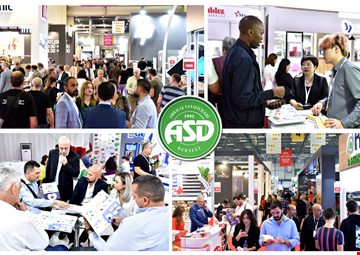
ASD President Zeki Sarıbekir: “Let Us Protect Our Health Through Packaging and Our Future Through Recycling”
World Food Safety Day was observed on 7 June under this year's theme, “From Burden to Solutions – Safe Food Everywhere,” while World Environment Day was marked on 5 June. Emphasising that access to safe food and environmental sustainability are inseparable, Zeki Sarıbekir, President of the Packaging Manufacturers Association (ASD) and CEO of Sarten, stated that the packaging industry is at the heart of the solution in both areas.
June brought together two important international observances that strengthen global awareness of environmental protection and food safety.
This year's World Food Safety Day theme, established by the United Nations, the Food and Agriculture Organization of the United Nations (FAO) and the World Health Organization (WHO), draws attention to reducing the burden of foodborne diseases through data-driven and solution-oriented practices.
Commenting on the issue, ASD President Zeki Sarıbekir said:
“Food safety is more than a public health issue; it is a multidimensional matter extending from economic sustainability to environmental management. According to the World Health Organization, approximately 600 million people are affected by foodborne illnesses every year. The entire chain, from production to consumption, must therefore be managed correctly.
“Each packaging material, including metal, glass, paperboard and different types of plastic, is designed according to the level of protection required by the food it contains. This diversity is not simply a matter of preference; it is a requirement of food safety. Protecting the right product with the right material is the foundation of the entire chain.”
“Packaging is the unseen guardian of the food chain”
Stating that food safety must be maintained not only during production but throughout the entire journey from transportation to the retail shelf, Sarıbekir continued:
“Advancing technologies and the correct selection of materials allow products to be protected under hygienic conditions, extend their shelf life, reduce food waste and safeguard consumers. These are the measurable outcomes of packaging's protective function.”
Sarıbekir also drew attention to the role of packaging in preventing food waste:
“According to the Food and Agriculture Organization of the United Nations, approximately one-third of all food produced worldwide, equivalent to 1.3 billion tonnes every year, is lost or wasted. FAO studies demonstrate that appropriate packaging plays a key role in preventing losses at almost every stage of the food supply chain.
“Protecting a product also means protecting the water, energy and labour used to produce it. This is precisely where food safety and environmental protection intersect.”
Greater protection with fewer materials: Innovation and artificial intelligence
Explaining the transformation the industry has undergone in recent years, Sarıbekir said:
“The packaging industry is being reshaped around the principle of delivering greater protection with fewer materials. Innovation is now seeking to answer two questions simultaneously: How can we protect a product using the minimum amount of material, and can the packaging be easily recycled after use?”
Sarıbekir also highlighted an important consideration that can often be overlooked:
“Reducing packaging materials without considering their protective function may leave the product inadequately protected and result in far greater waste. Food that is discarded carries a significantly higher environmental cost than the packaging used to protect it.
“Scientific life-cycle assessments show that the environmental benefits delivered by well-designed packaging can outweigh the impact of producing the packaging itself. The right packaging is not necessarily the smallest amount of packaging; it is the most efficient packaging capable of protecting the product safely.”
Noting that circular economy principles and artificial intelligence are shaping the future of the industry, Sarıbekir explained the practical impact of this transformation:
“For us, sustainability is first and foremost a responsibility: the responsibility to leave a liveable world to future generations.
“Artificial intelligence is one of the most powerful enablers of this transformation. Algorithms can calculate packaging designs that protect products in the most efficient and recyclable manner. Sensor-based smart sorting systems can separate waste with a level of precision beyond the capabilities of the human eye, improving the quality of recycling. Applications such as digital product passports can also provide transparent records of packaging composition and recyclability.”
“The environmental problem is not the existence of packaging, but the failure to manage waste”
Rejecting the portrayal of packaging as a primary cause of environmental pollution, Sarıbekir emphasised that the real issue is the management of packaging after use:
“The problem is not packaging itself, but our failure to return it to the system after use. The environmental problem is not the existence of packaging; it is the failure to manage waste.
“Packaging that is designed and collected correctly can become one of the most valuable raw materials in the circular economy. Achieving this requires every link in the chain, from design and collection to sorting and recycling infrastructure, to work together. This is a shared responsibility involving industry, local authorities and citizens.”
Referring to Türkiye's progress, Sarıbekir also offered a realistic assessment of the distance still to be covered:
“Türkiye has announced that, through the Zero Waste Movement, it increased its recovery rate from 13 per cent in 2017 to 37.5 per cent by the end of 2025. This represents significant progress.
“However, we must also recognise that the recycling rate for packaging waste in the European Union has exceeded 60 per cent. We still have considerable ground to cover, particularly in establishing a social culture of correctly separating waste at source. The encouraging point is that this gap can be closed rapidly when the right systems are put in place.”
2026 marks a critical period for the industry: The deposit return system, PPWR and COP31
Sarıbekir described 2026 as a critical year for the packaging industry and highlighted three developments that will directly affect the sector:
“Türkiye is gradually expanding its Deposit Management System for beverage packaging. This is an important step towards the separate collection of waste at source, and its success depends on the joint efforts of all stakeholders.
“During the same period, the European Union's new Packaging and Packaging Waste Regulation, known as the PPWR, will begin to apply on 12 August 2026, introducing gradual but binding obligations concerning recyclability and recycled content. This is an agenda that our members exporting to Europe need to follow closely.”
Highlighting that Türkiye will host the COP31 Climate Summit in Antalya in November, Sarıbekir continued:
“We need to view sustainability not as a cost of compliance, but as a competitive advantage in global markets.
“In this transformation, which benefits both the environment and business, ASD's role is to inform its members about production with a lower carbon footprint and recyclability criteria, while representing the Turkish packaging industry on national and international platforms.
“Sustainable packaging is no longer a choice; it is a standard required by global trade.”
Sarıbekir concluded by bringing the messages of the two international observances together:
“We can no longer afford to treat safe food and a clean environment as separate issues. Both are part of the same responsibility. Our objective is therefore simple but clear: Let us protect our health through packaging and our future through recycling.”
Other Recent News
.png?w=360&h=255&scale=both&mode=crop&anchor=middlecenter&404=404.png)
ASD President Zeki Sarıbekir: “Let Us Protect Our Health Through Packaging and Our Future Through Recycling”
Read More.png?w=360&h=255&scale=both&mode=crop&anchor=middlecenter&404=404.png)
University Students Left Their Mark on Global Packaging Design Competitions
.png?w=360&h=255&scale=both&mode=crop&anchor=middlecenter&404=404.png)
WorldStar 2026 & AsiaStar 2025 Results Announced
Read More
Turkey Becomes Strategic Hub for Packaging, Welcomes 140 Countries in Four Days

Applications Now Open for the 21st Packaging Design National Student Competition
“Ambalaj Ay Yıldızları” Ranked Among the World's Top Five
Türkiye Becomes the Most Awarded Country
Türkiye's Trade Surplus in the Packaging Sector Continues to Grow
The Packaging Industry Takes Action for a Green Future
 - Copy 2.png?w=360&h=255&scale=both&mode=crop&anchor=middlecenter&404=404.png)
Eurasia Packaging Fair ended with a record number of visitors
Read More.png?w=360&h=255&scale=both&mode=crop&anchor=middlecenter&404=404.png)
The winners of the National Packaging Design Student Competition Announced
Read More
‘Crescents and Stars for Packaging' awards found their winners
Read More.png?w=360&h=255&scale=both&mode=crop&anchor=middlecenter&404=404.png)
Foreign trade surplus of 1.1 billion dollars from the packaging sector in the first 6 months of 2024
Explore Sustainable Packaging Solutions of The Future at Eurasia Packaging Istanbul Fair!
Read More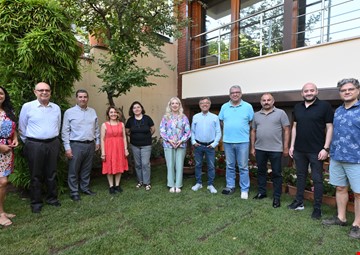
The Crescents and Stars for Packaging 2024 Competition Finalists
Read More
Packaging Sector Achieved 2.2 Billion Dollars of Foreign Trade Surplus
Read More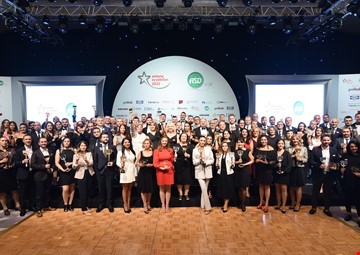
Applications Started to Be a ‘Star' of Packaging
Read More
‘Faster' Export Period in Packaging
Read More
The Packaging Sector Came Together at ‘ASD Packaging Congress'
Read More